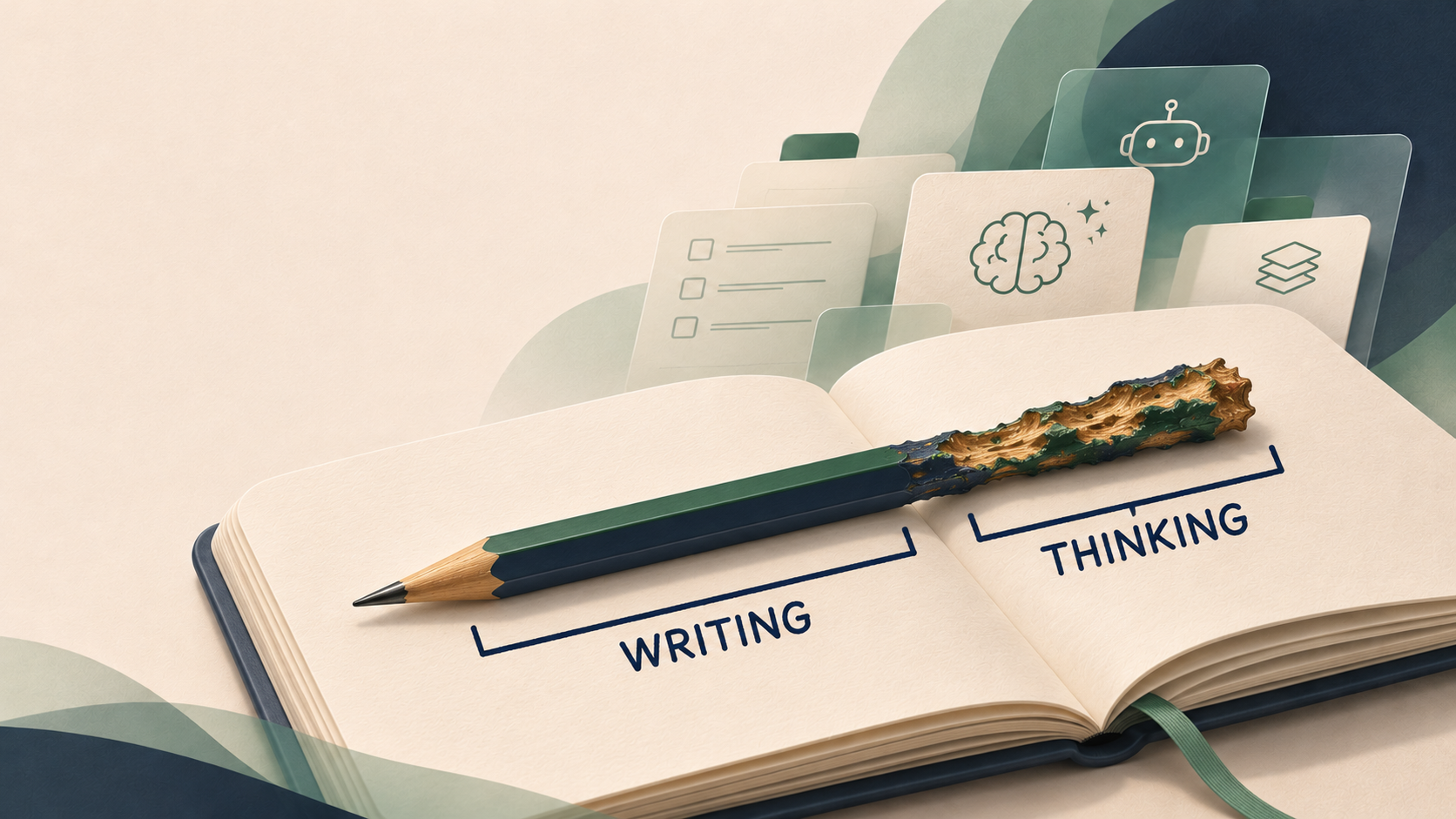
The fastest way to lose your own point of view is to outsource the first draft of your thinking.
AI is excellent at removing the boring parts of writing. It can turn a rough voice note into a clean outline, find the thread in a messy meeting, and help a half-formed idea become something you can inspect.
That is the good shortcut.
The bad shortcut is asking the tool to decide what you believe before you have spent enough time forming a view of your own.
This distinction matters because polished language can create a false sense of progress. A page fills up. The sentences sound confident. The structure looks finished. But the hard work may have been skipped: noticing uncertainty, choosing what matters, and deciding what evidence would change your mind.
That is how an assistant can quietly become a substitute for judgment.
The pencil is still useful
There is a reason a simple pencil remains useful in a world full of generative tools. A pencil slows the idea down just enough to make it visible. You cannot ask it to invent your position. You have to put something on the page first.
The goal is not to reject AI or turn every thought into a handwritten ritual. The goal is to keep an intentional first move in the loop.
Before opening an AI tool, write three short lines:
1. What I currently think. 2. What I am unsure about. 3. What would change my mind.
Then use AI as a thinking partner. Ask it to challenge the position, identify missing evidence, show the strongest alternative, or point out where two questions have been mixed together.
That creates a better division of labor. You bring the context, the stakes, and responsibility for the decision. The tool brings speed, comparison, memory, and a willingness to generate possibilities without getting tired.
Where second-brain systems help
Your second brain should not be a warehouse of attractive summaries. It should help you return to the important parts of your thinking.
When a note matters, connect it to a decision. Record why it mattered at the time. Keep the unresolved question visible. Later, an AI system can help you find related notes and show patterns—but it should not erase the trail that lets you judge those patterns.
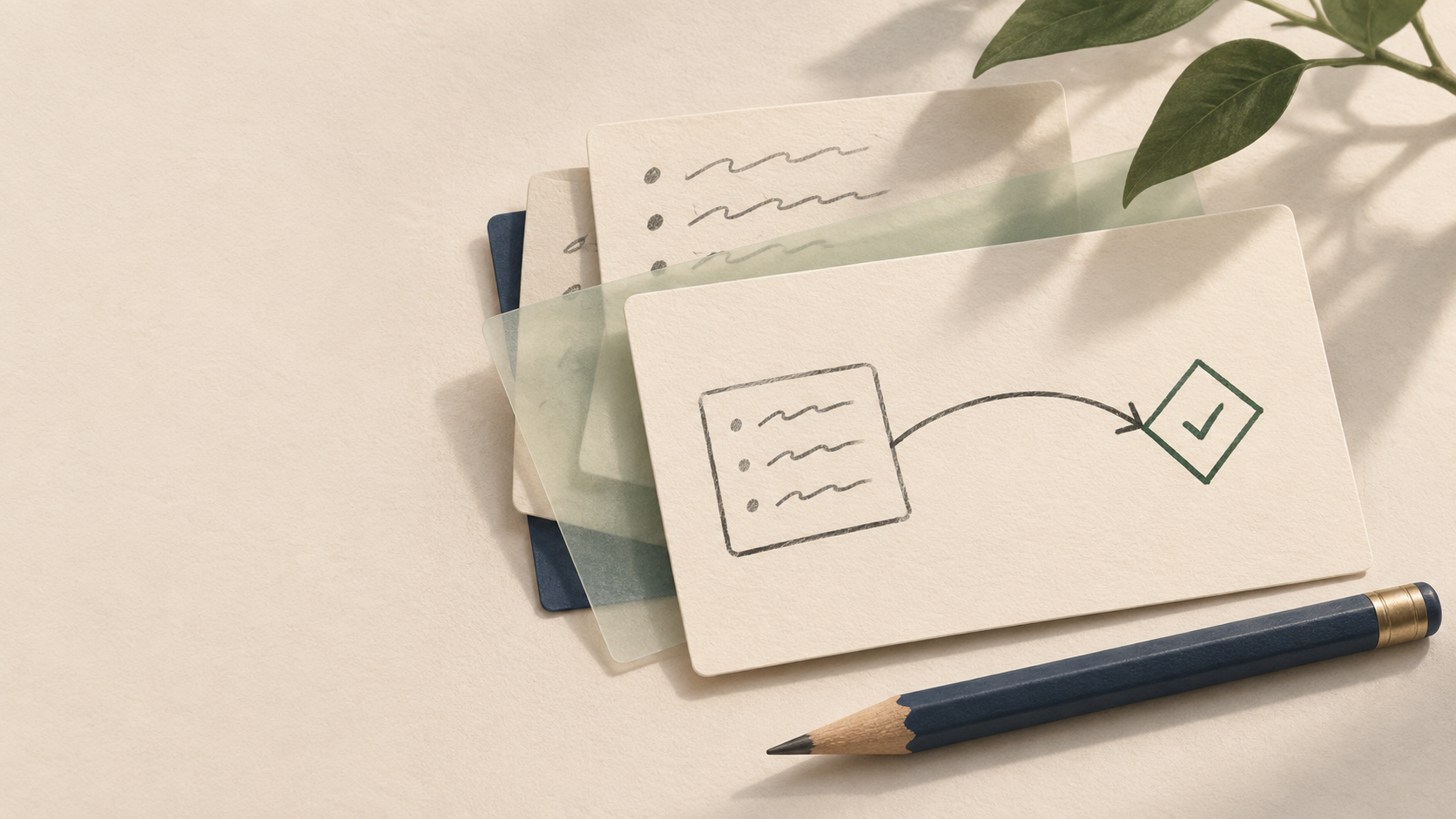
This is the useful promise of AI-assisted notes: less time hunting for the words, more time deciding what the words mean.
A small practice for this week
Pick one note you captured recently. Add three labels:
- Observation: what happened or what you learned.
- Decision: what choice or next step it points toward.
- Reasoning: why that choice makes sense right now.
Then ask your AI tool one question: “What am I assuming here?”
Do not ask it to make the decision for you. Ask it to make your decision easier to examine.
That is the line worth protecting. Let AI reduce typing. Keep the thinking yours.
Keep the useful friction
The best AI workflow is not the one that makes every thought effortless. It is the one that removes busywork while keeping the moments that create judgment visible.
Write the first position. Save the uncertainty. Keep the decision trail. Use AI to test your thinking, not to quietly replace it.
Read more NDR Guru notes on second brains, decision hygiene, and using AI without handing over your judgment. Then try the three-line practice on one real note today.